
Why does pet food packaging leak oxygen during shelf life?
6/22/20262 min read
Many pet food brands have encountered this problem: the packaging looks perfectly intact, but the product still goes stale, develops off-flavors, or even spoils before the end of its shelf life.
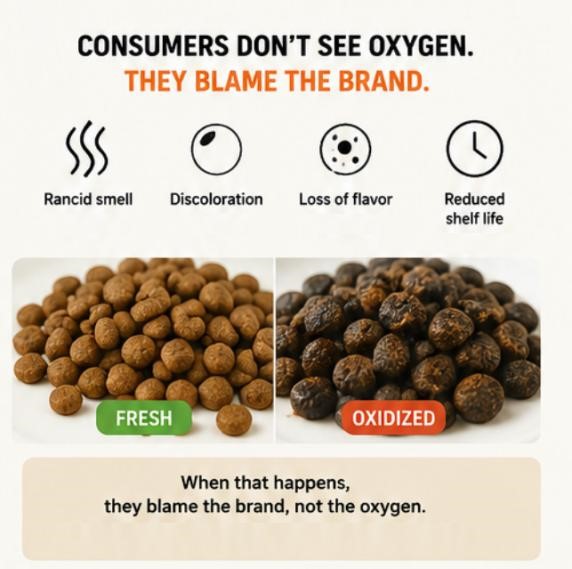
Consumers won't blame the oxygen — they'll blame your brand.
The problem usually comes down to three areas:
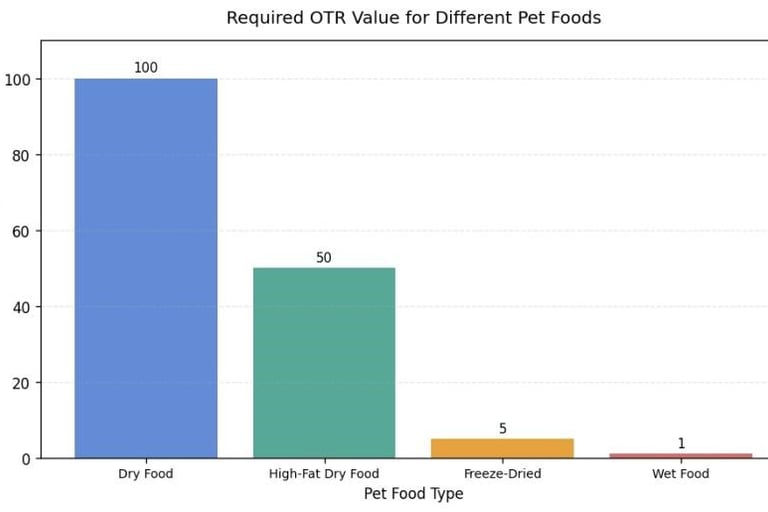
Image1: Pet Food OTR Requirements Comparison (cc/m²·day)
Oxygen leakage ≠ Air leakage
This is a very common misconception that's easy to overlook.
"Air leakage" means the bag has obvious damage, openings, or pinholes — you can usually detect it by squeezing the package.
"Oxygen leakage" is completely different. The packaging looks flawless, but oxygen is still continuously penetrating.
1. Wrong material OTR (Oxygen Transmission Rate) selection
Different pet foods have completely different oxygen tolerance levels:
• Dry kibble (regular): OTR ≤ 100 cc/m²·day
• Premium dry kibble (high-fat): OTR ≤ 50
• Freeze-dried food: OTR ≤ 5
• Wet food: OTR ≤ 1
Many brands use PET/PE for freeze-dried bags, which may have an OTR as high as 80. The result? In less than 3 months, the freeze-dried product changes color and loses its flavor.
2. The seal area isn't "fully sealed"
The seal may look closed, but under a microscope, problems can be found: seal contamination by oils, insufficient heat-sealing temperature, or uneven heat-sealing pressure. All of these can cause micro-channel leakage — oxygen slowly enters along the seal edge.
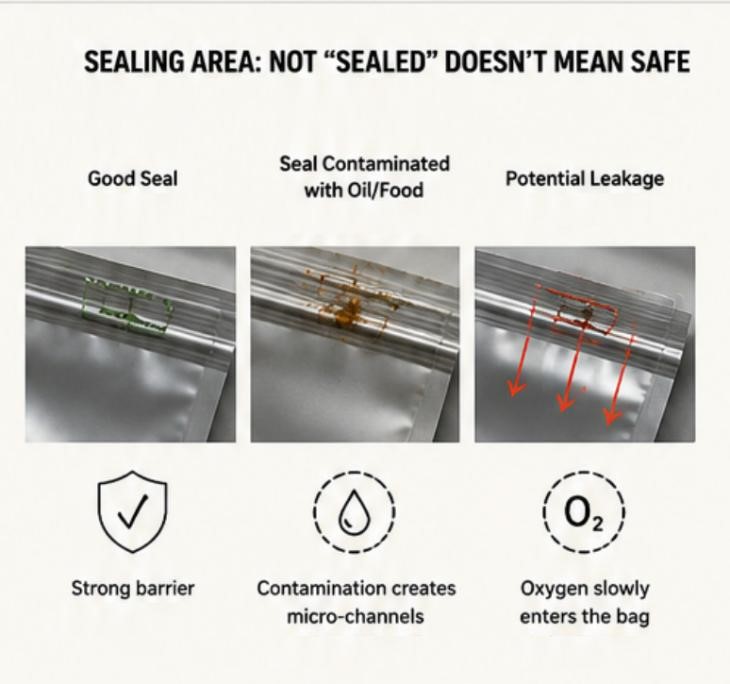
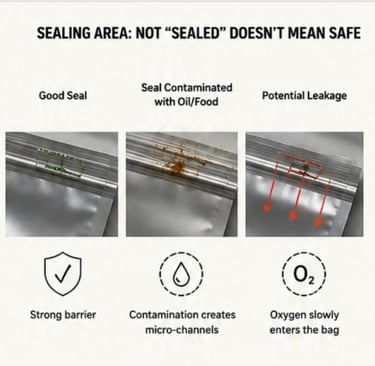
Image 2: Schematic diagram of micro-leakage caused by seal contamination
3. EVOH "fails" in humid environments
Many transparent high-barrier packages use EVOH. But EVOH has a fatal weakness: it's sensitive to moisture. When relative humidity exceeds 80%, the oxygen barrier performance of EVOH can drop by 10 to 100 times. If you sell such products in Southeast Asia or during the rainy season in southern China, shelf life can be cut in half.
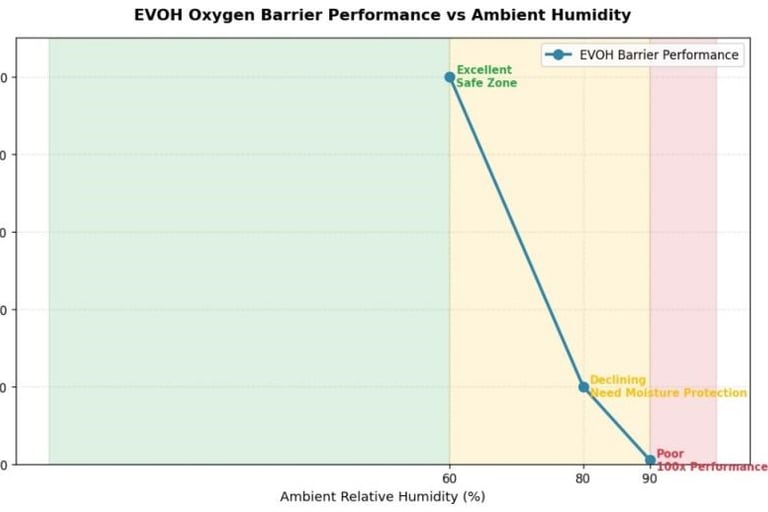
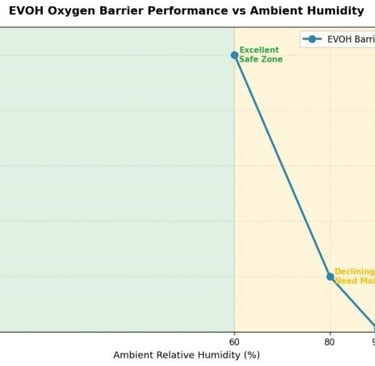
Image 3: EVOH oxygen transmission rate vs. ambient humidity curve
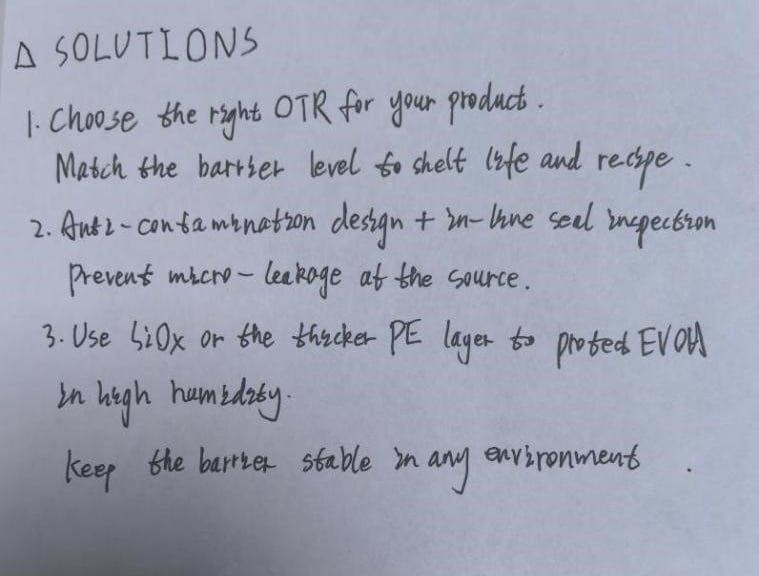
Solutions:
1. Select the correct OTR based on the product type.
2. Implement contamination-resistant design at the seal area + online visual inspection.
3. In high-humidity regions, use SiOx or thicker PE to protect EVOH.
Packaging is not "good enough" just because it looks airtight. It must be designed as part of the shelf life itself.
© 2026 LX PetFoodBag Manufacturing. All rights reserved.


Professional pet food packaging manufacturer with a 25,000㎡ facility and advanced printing technology. Delivering premium custom packaging solutions to global brands since 2010.
Contact
ADD: 123 Packaging Way,
Industrial District,
Guangdong. China
TEL : +8613380674348