
Pet Food Packaging Myth: Is Thicker Always Better?
7/6/20261 min read
I. Many People Misunderstand: "Thicker Is Always Better"
Figure 1: Comparison Diagram – Thick Packaging vs. Optimized Structure
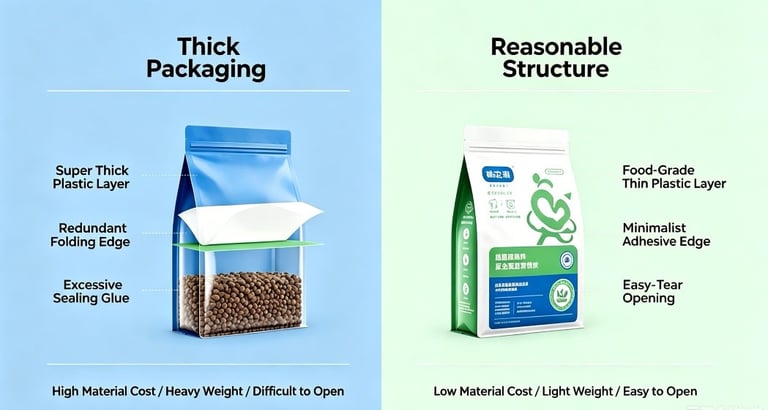
Many consumers — and even some brands — assume that:
Thicker packaging = Stronger = More premium = Better freshness preservation
But in the pet food industry, this logic does not hold.
👉 The quality of packaging is not determined by thickness, but by "structural design."
II. Why Does Packaging Become "Thicker"?
Figure 2: Cross-Sectional Diagram of Multi-Layer Structure
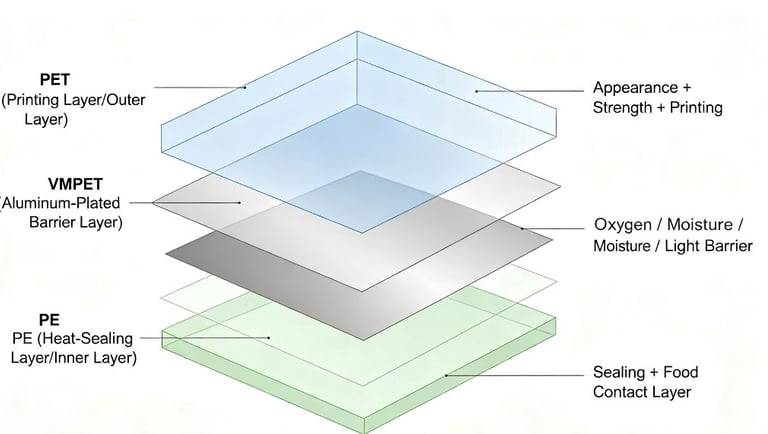
Pet food packaging typically uses a multi-layer laminated structure, for example:
PET (outer layer for strength + printing), Barrier layer (high-barrier material), PE (inner layer for food contact).
👉 So-called "thickness" usually comes from:
Multiple layers stacked together
Increased adhesive layers
Thicker materials
But here's the problem:
Thick ≠ Better barrier performance
III. What Really Matters?
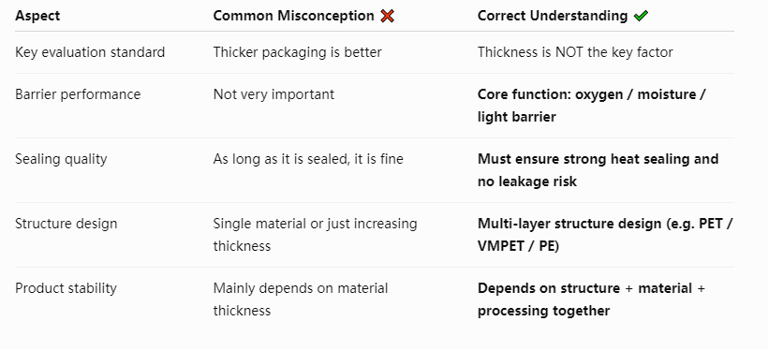
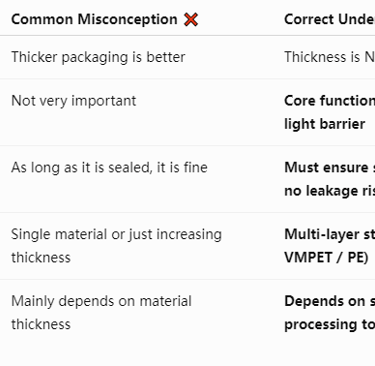
The core factors that determine packaging quality are:
✔Barrier performance
Oxygen barrier, moisture barrier, light barrier
✔ Seal quality
Whether the heat seal is strong and airtight
✔ Structural design
Whether the material structure is well-designed, not simply thickened
IV. Summary
The core of pet food packaging is not "thickness," but rather "structural design + barrier performance + seal reliability."
© 2026 LX PetFoodBag Manufacturing. All rights reserved.


Professional pet food packaging manufacturer with a 25,000㎡ facility and advanced printing technology. Delivering premium custom packaging solutions to global brands since 2010.
Contact
ADD: 123 Packaging Way,
Industrial District,
Guangdong. China
TEL : +8613380674348