
How To Choose Pet Food Packaging
Learn how to pick the best pet food bag – fresh food, less waste, happy pet!
4/9/20263 min read
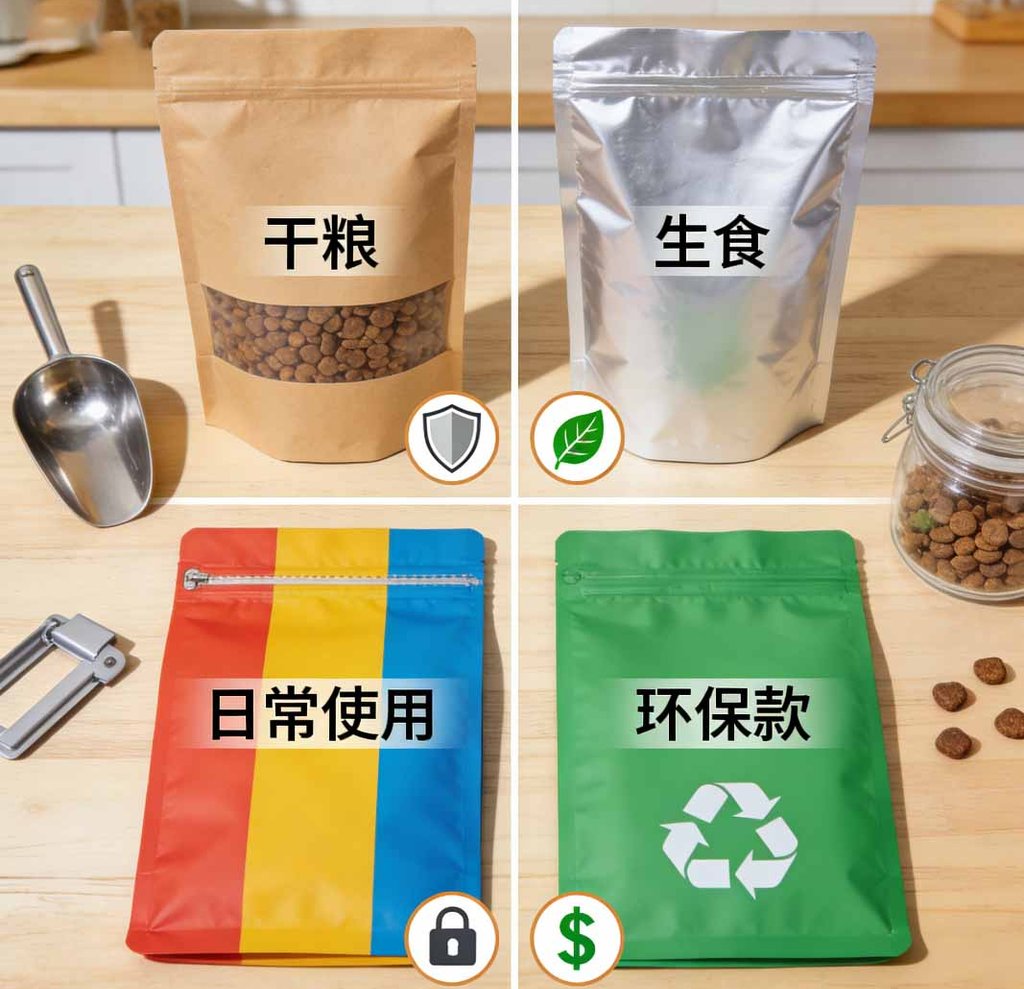
🐱 How To Choose Pet Food Packaging 🐶
Standing in the pet food aisle, surrounded by dozens of bags… 🤯
Different materials, sizes, zippers, windows – where do you even start?
Don't worry! This guide will help you choose like a pro. ✅
Let's break it down into 5 simple steps. 👇
🧐 Step 1: Know What's Inside First
Before you pick the bag, think about what you're buying:
| Food Type | Packaging Needs |
| 🍚 Dry kibble | Air-tight, light-blocking |
| 🥩 Freeze-dried raw | Moisture-proof, strong seal |
| 🐟 Semi-moist treats | Resealable, portion-friendly |
| 🧊 Frozen raw | Freezer-safe, tear-resistant |
💡 Different foods need different protection. A great bag for kibble might fail for raw food!
📦 Step 2: Choose the Right Material
Here are the most common packaging materials – and what they're good for:
🟤 1. Kraft Paper + Plastic Lining
Best for: Large bags of dry kibble
✅ Blocks light
✅ Strong and tear-resistant
✅ Cheap (saves you money 💰)
❌ Not fully recyclable
❌ Doesn't reseal well after opening
🐕 Tip: Use a clip or transfer to a container after opening!
✨ 2. Aluminum Foil Laminate
Best for: Premium, raw, or freeze-dried food
✅ Total barrier – blocks air, light, moisture, and smells
✅ Keeps food fresh for over a year (unopened)
✅ Perfect for high-fat foods (no rancidity)
❌ More expensive
❌ Hard to recycle
🥩 If you smell the food through the bag before opening – put it back. That's a bad seal!
♻️ 3. Mono-Material Plastic (PE or PP)
Best for: Eco-conscious pet parents 🌍
✅ 100% recyclable (where soft plastics are accepted)
✅ Lightweight and durable
✅ Can have zippers and windows
❌ Less airtight than foil
❌ Not yet available for all brands
🐾 Look for the "Store Drop-Off" recycling symbol!
🔘 4. Stand-Up Pouch with Zipper
Best for: Small to medium bags, treats
✅ Resealable – keeps food fresh longer
✅ Easy to pour (no mess!)
✅ Saves shelf space
❌ Zippers can break over time
❌ Not great for very large bags
⭐ This is the most user-friendly option for daily feeding.
🔒 Step 3: Check the Closure
A good bag keeps air out after you open it. Here's what to look for:
| Closure Type | Rating | Best For |
🔘 Press-to-close zipper | ⭐⭐⭐⭐⭐ | Daily use, easy for everyone |
🧲 Magnetic seal | ⭐⭐⭐⭐ | Light use, less common |
✂️ Tear-open (no reseal) | ⭐⭐ | One-time use – needs a clip |
📦 Box + inner bag | ⭐⭐⭐ | Cereal-style, okay but not great |
✅ Pro tip: If the bag doesn't have a zipper, buy a bag clip or airtight container!
👁️ Step 4: Decide About Windows
Some bags have a clear plastic window so you can see the food inside.
Pros of windows:
✅ See the kibble shape and size
✅ Check for broken pieces or color changes
✅ Looks nice and premium
Cons of windows:
❌ Lets in light (light destroys vitamins A, E, and fats)
❌ One more place for air to sneak in
❌ Makes recycling harder
🐱 If you buy food with a window, store the bag in a dark cupboard – not in direct sunlight!
🌍 Step 5: Consider the Environment
More pet parents care about recycling – and that's great! Here's a quick eco-guide:
| Packaging Type | Recyclable? | Eco-Rating |
| Multi-layer paper + plastic | ❌ No | 🌟 |
| Aluminum foil laminate | ❌ Rarely | 🌟 |
| Mono-material plastic (PE/PP) | ✅ Yes (store drop-off) | 🌟🌟🌟 |
| Cardboard box (no plastic) | ✅ Yes (curbside) | 🌟🌟🌟🌟 |
| Compostable plant-based bag | ✅ Compost (industrial only) | 🌟🌟🌟🌟🌟 |
🌎 Compostable bags sound great – but most home compost bins won't break them down. Check your local facilities!
✅ Quick Checklist: How to Choose
Before you buy, ask yourself these 5 questions:
- What type of food is it? (Kibble? Raw? Treats?)
- How fast will my pet eat it? (Fast = less strict needs)
- Does it have a resealable zipper? (Yes = fresher food)
- Can I recycle it where I live? (Check local rules)
- Is the bag damaged? (No puffy spots, holes, or bad smells)
If you can answer all 5 – you're ready to buy! 🎉
🚫 Red Flags – When NOT to Buy
| Problem | What It Means |
| 💨 Puffy or swollen bag | Bacteria or yeast growing inside – DANGER ⚠️ |
| 👃 Strong smell through bag | Seal is broken – air already got in |
| 🕳️ Small holes or tears | Pests or moisture can enter |
| 🧴 Greasy spots on bag | Fats are leaking – rancidity coming |
| 📅 Expired or close to expiry | Nutrients have degraded |
🐕🦺 When in doubt, put it back. Your pet's health comes first!
📊 Decision Chart – At a Glance
| If you want... | Choose... |
| 💰 Best price | Kraft paper + lining (large bag) |
| 🥩 Maximum freshness | Aluminum foil laminate |
| 🌍 Eco-friendly | Mono-material plastic (recyclable) |
| 🍽️ Daily convenience | Stand-up pouch with zipper |
| 🧳 Travel / sampling | Small stand-up pouch |
| 🏠 Small apartment | Medium bag + airtight container |
💡 Bonus: How to Store After Opening
Even the best packaging needs your help! After opening:
1. Keep the original bag (has lot number for recalls) 🏷️
2. Close the zipper tightly – or use a bag clip ✂️
3. Put the bag inside an airtight container (metal, glass, or pet-specific) 🫙
4. Store in a cool, dry place – below 80°F (27°C) 🌡️
5. Use within 6 weeks for best freshness 📅
❌ Don't just roll down the top and clip it – air still gets in!
🐾 Final Thoughts
Choosing the right pet food packaging isn't complicated – just remember:
🔹 Match the bag to the food (kibble needs different protection than raw)
🔹 Prioritize resealable zippers (freshness = happy pet)
🔹 Check for damage before buying (no puffy or smelly bags)
🔹 Think about recycling if that matters to you
🔹 Store properly after opening (airtight container + cool place)
Your dog or cat trusts you with every meal. 🐕❤️🐱
Choosing the right bag is an easy way to protect their health – and your wallet.
© 2026 LX PetFoodBag Manufacturing. All rights reserved.


Professional pet food packaging manufacturer with a 25,000㎡ facility and advanced printing technology. Delivering premium custom packaging solutions to global brands since 2010.
Contact
ADD: 123 Packaging Way,
Industrial District,
Guangdong. China
TEL : +8613380674348